Heavy Duty Adjustable Shoring Post: Load Ratings, ANSI/SSFI Standards & When You Need One
A standard adjustable shoring post covers most point-load jobs — but thick slab formwork, industrial retrofits, and heavy equipment support routinely exceed what a standard post is rated for. That’s where heavy duty adjustable shoring posts come in. Here’s what actually makes a post “heavy duty,” how load ratings work, and when a standard post isn’t enough.
What Makes a Shoring Post “Heavy Duty”?
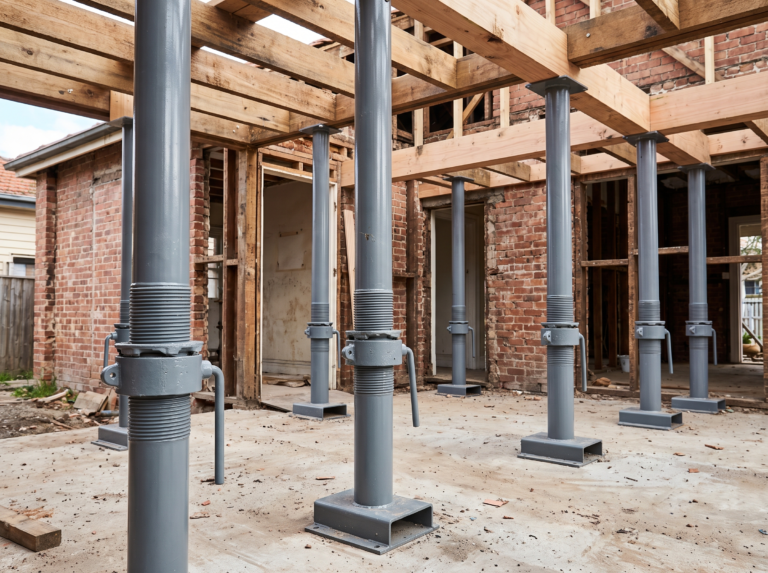
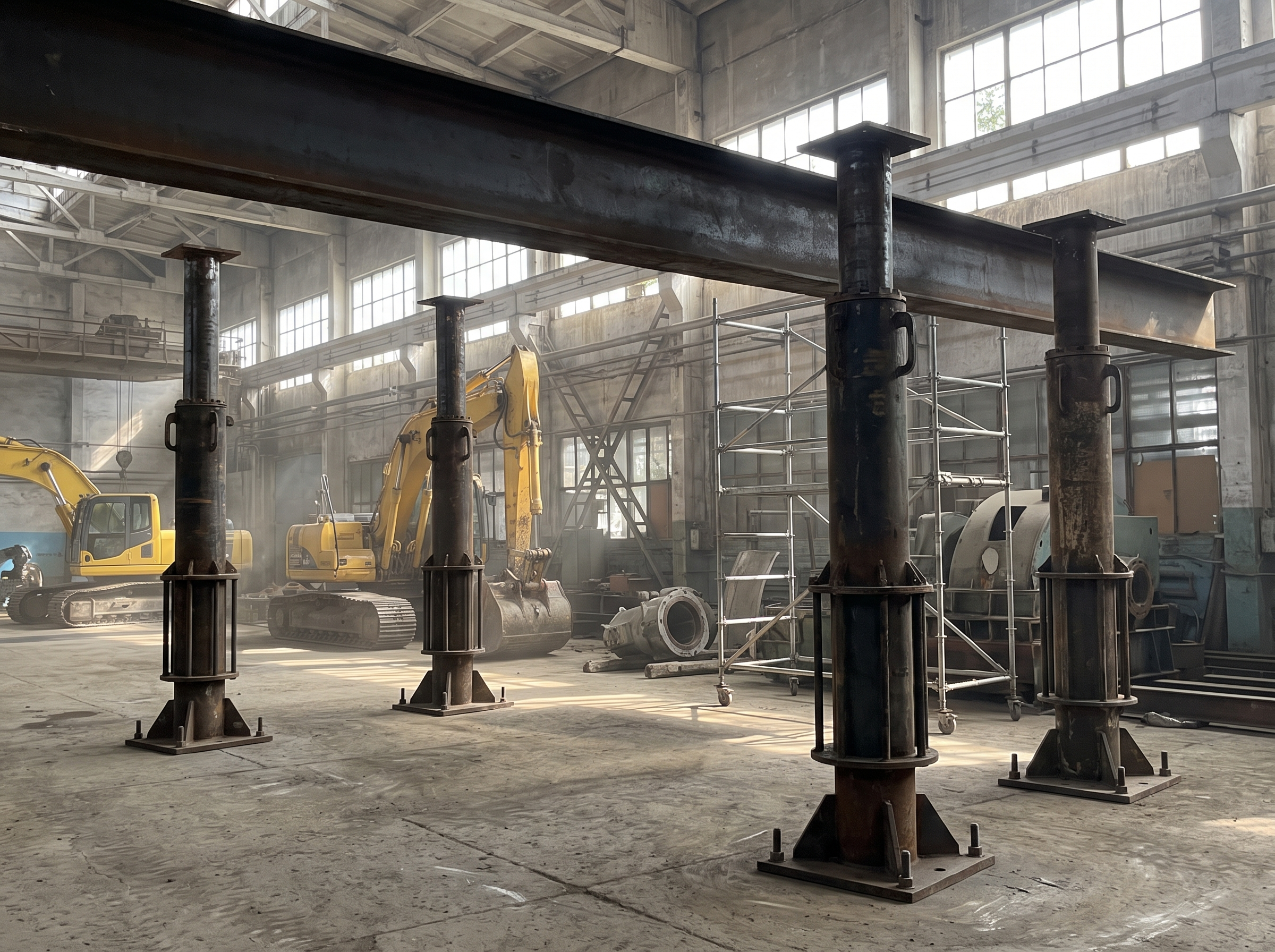
It’s not a marketing label — it comes down to tube diameter and wall thickness. A heavy duty post uses larger, thicker-walled steel tubing than a standard adjustable post, which is what lets it carry substantially more load across the same height range. Heavy duty posts are built and tested to ANSI/SSFI standards — the same body (the Scaffold & Shoring Institute, a division of the Scaffold & Access Industry Association) that sets design, testing, and safety-factor standards for scaffolding and shoring equipment across North America.
Load Capacity: Extended vs. Closed
The single most important number on any shoring post’s spec sheet isn’t its maximum capacity — it’s the capacity at the extension you’re actually using. Manufacturer ratings for heavy duty posts commonly show a large gap between closed and fully extended capacity — a post rated for roughly 15,000 lbs closed can drop to well under half that fully extended. Specialized heavy lifting shores go further still, with some rated up to 50,000+ lbs at shorter, less-extended heights. There’s no universal number across brands and models — the point is that capacity is extension-dependent, not a single fixed spec, and sizing a job off the wrong number on the sheet is a real failure mode.
ANSI and SSFI also require a safety factor — typically 2 to 4 times the rated working load, depending on the component — built into that published number, not stacked on top of it by the crew in the field.
Industrial & High-Load Applications
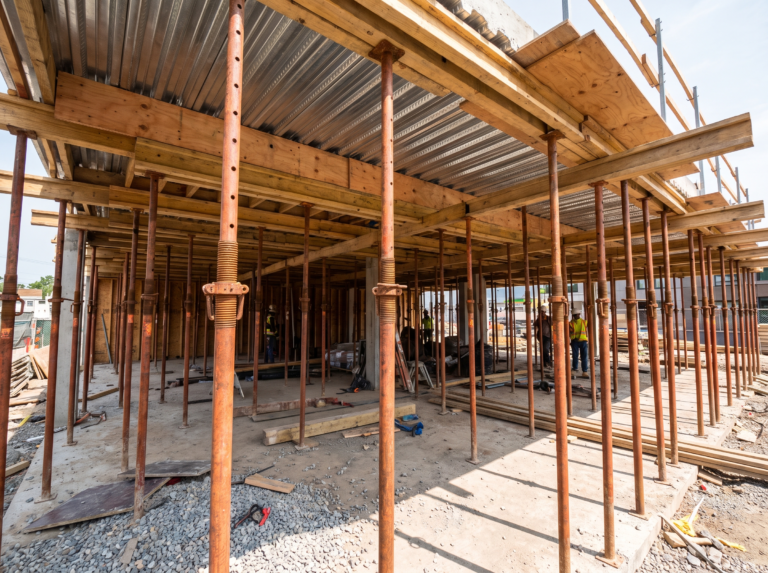
Thick slab and beam formwork. Elevated structural slabs and large beams carry far more load per support point than typical residential or light-commercial formwork.
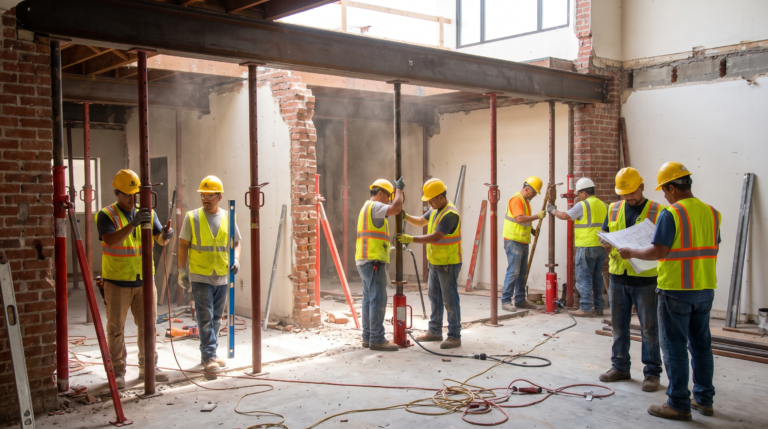
Industrial facility retrofits. Supporting mezzanines, heavy equipment platforms, or structural elements in an active industrial building often means point loads a standard post was never rated for.
Heavy equipment and machinery support. Temporarily supporting the structure around or beneath heavy installed equipment during a move, replacement, or foundation repair.
Taller extensions carrying real load. Standard posts lose capacity fast as they extend — a heavy duty post buys back usable capacity at the taller extensions a job actually needs.
Heavy Duty Post vs. Standard Post vs. Screw Jack Formwork System
All three are built around the same core idea — see our adjustable shoring post guide for the fundamentals — but they solve different problems. A standard adjustable post handles a single, modest, well-understood point load. A screw jack formwork system is about coordinating many points to precise, adjustable heights across a concrete pour. A heavy duty post is about raw capacity at a single point — thicker tube, higher rating, same basic mechanism. Picking the right one is a load and application question, not a preference.
When You Need a Professional
The load exceeds standard equipment ratings. Once a job’s point load is outside what a standard adjustable post is rated for, sizing the right heavy duty equipment — and confirming it at the actual extension being used — needs real numbers, not a guess.
It’s an industrial or structural application. Facility retrofits, heavy equipment support, and structural formwork are engineered-shoring territory regardless of how simple the setup looks.
You need equipment rated and documented to ANSI/SSFI standards. Not all posts on a jobsite are created equal — working with a supplier who can document ratings matters when the load is real.
FAQs About Heavy Duty Adjustable Shoring Posts
What load can a heavy duty adjustable shoring post carry?
It varies significantly by model and, most importantly, by how far the post is extended — capacity at full extension is often well under the post’s closed-height rating. Always check the manufacturer’s rating at the actual extension you plan to use, not the maximum listed figure.
What’s the difference between a heavy duty post and a standard adjustable shoring post?
Tube diameter and wall thickness. A heavy duty post uses larger, thicker steel tubing, which is what allows a higher load rating across the same height range — not a different mechanism.
Are heavy duty shoring posts required to meet a safety standard?
Yes — ANSI/SSFI standards, maintained by the Scaffold & Shoring Institute (a division of the Scaffold & Access Industry Association), govern design, testing, and required safety factors (typically 2 to 4 times the rated working load) for shoring and scaffolding equipment.
When is a heavy duty post the wrong choice instead of a screw jack system?
When the job needs multiple coordinated support points across a concrete pour or formwork deck rather than one high-capacity point — that’s a screw jack formwork system, not a single post, regardless of how heavy-rated the post is.
Golden Scaffold rents heavy duty adjustable shoring posts and full structural shoring systems for commercial, industrial, and residential projects throughout Los Angeles and Orange County (CA License #1109519). Call (424) 476-4426 or visit Golden Scaffold for an obligation-free quote — and see our structural shoring services for more on how we support your next project.