Screw Jack Shoring: Formwork Support, Extension Rules & Shore Removal Timing
Concrete formwork and falsework live and die on precise, adjustable support — which is exactly what a screw jack is built for. This guide covers how screw jacks work in a formwork/shoring system specifically, the load and extension rules that govern them, and when shore removal is actually allowed.
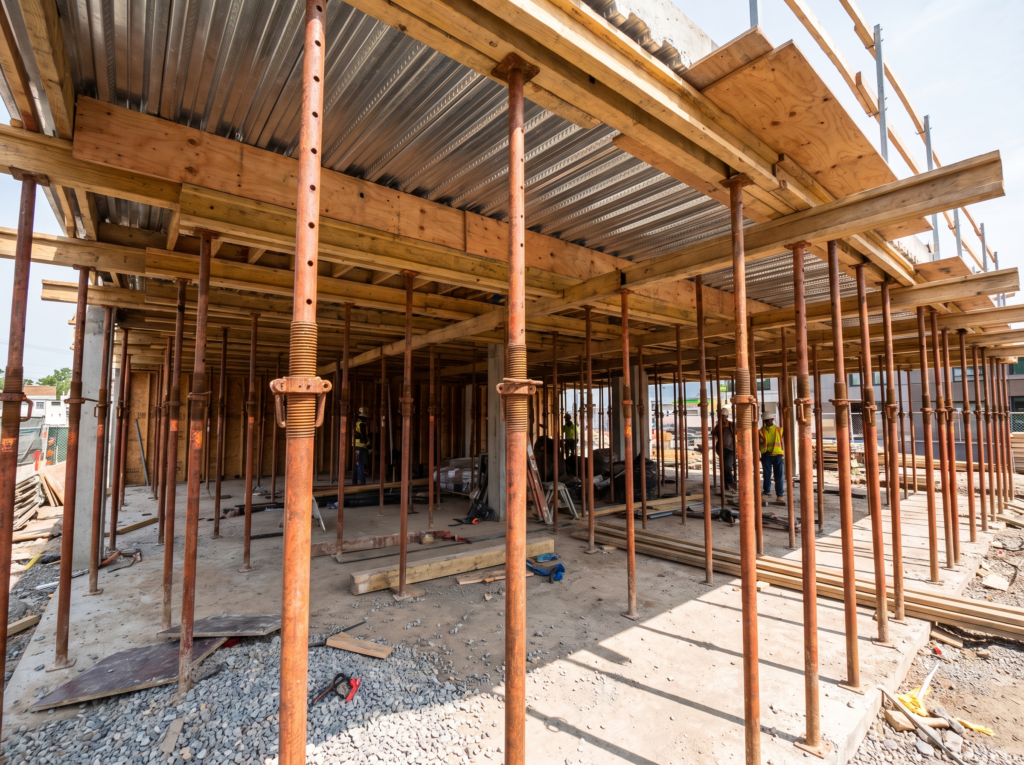
What Is Screw Jack Shoring?
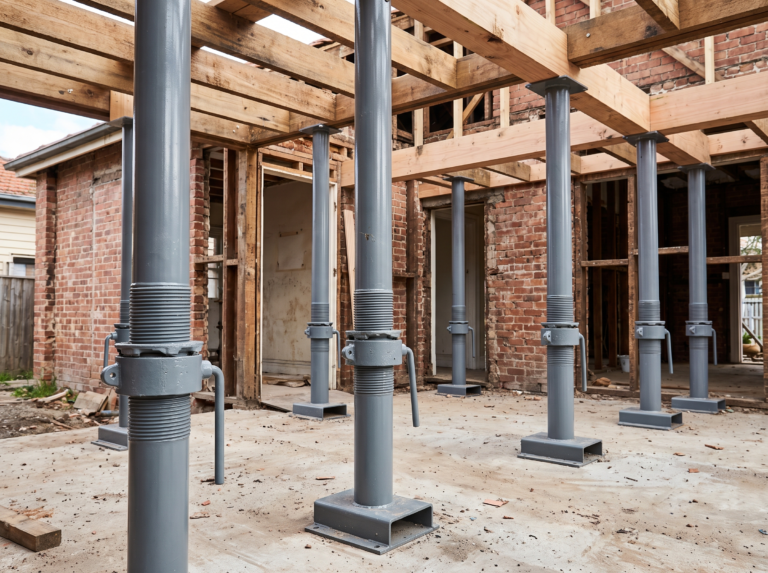
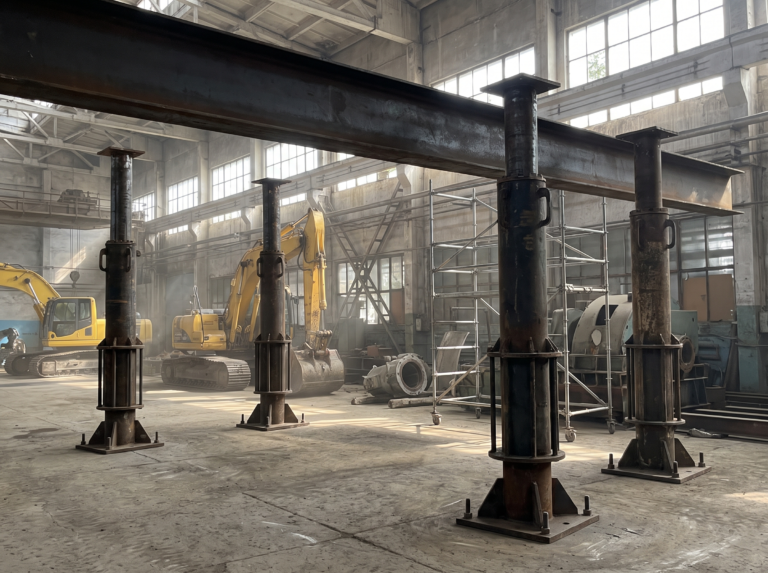
A screw jack is a threaded steel adjustment mechanism — usually mounted on top of a shoring post, frame leg, or falsework tower — that lets you fine-tune height by turning a collar rather than repositioning a pin. In formwork and falsework systems specifically, screw jacks are what let a crew level an entire deck of stringers and joists to the fraction of an inch a concrete pour actually needs, and make small adjustments after the system is already carrying load — something a pin-and-collar post can’t do.
Why Screw Jacks for Formwork and Slab Shoring
Precise leveling before the pour. A slab or deck form has to be dead level (or at a specific designed slope) before concrete goes in — screw jacks are how a crew dials that in across dozens of support points.
Adjustment under load. Formwork settles slightly as concrete is placed. A screw jack lets a crew correct for that without unloading the system first.
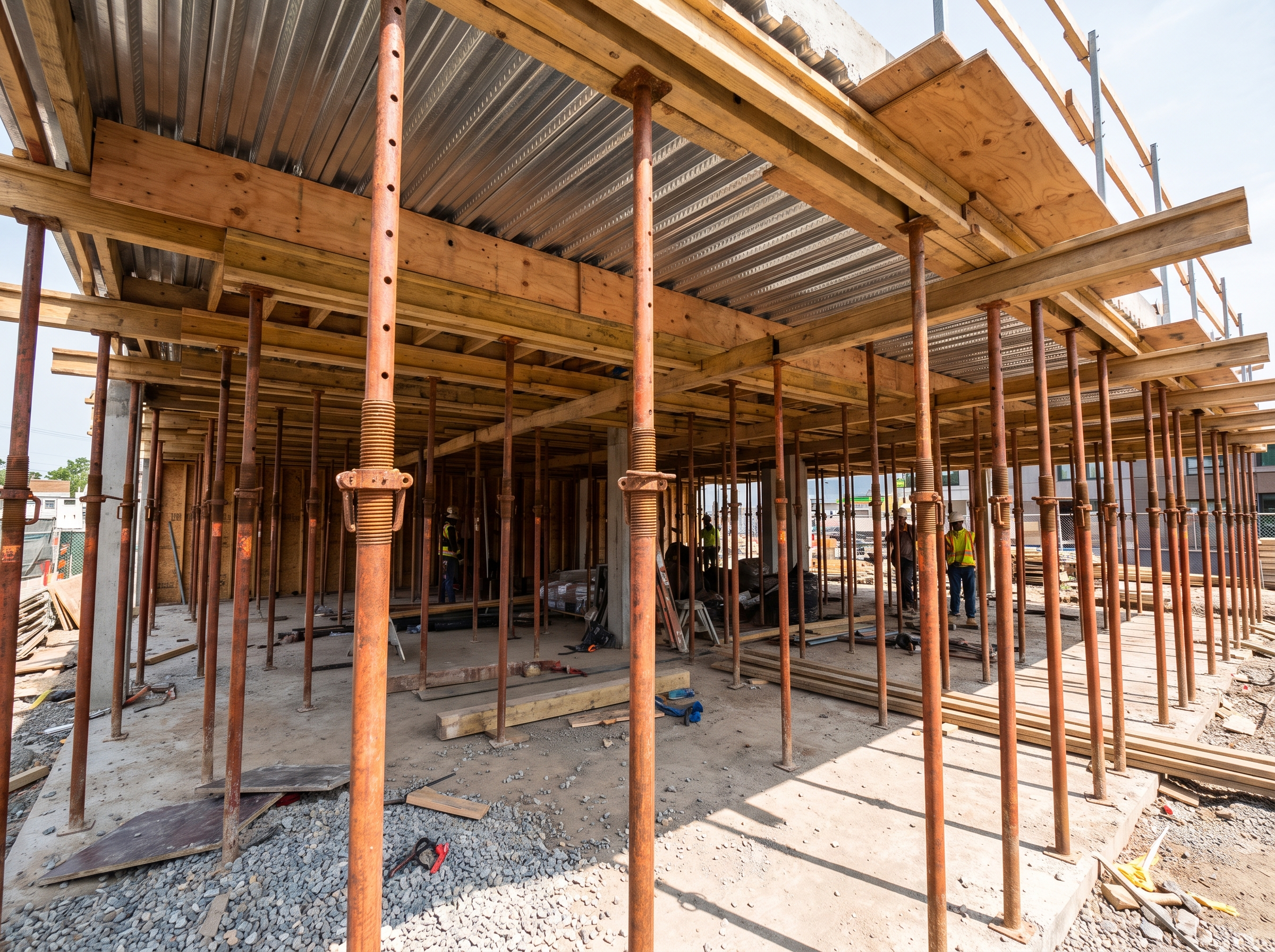
Ganged, multi-point systems. Formwork shoring is rarely a single post — it’s a grid of jacks under stringers and joists, all needing to carry a coordinated, calculated load. That’s a different scale of planning than a single adjustable post holding one beam.
Extension & Load Capacity Rules
California’s falsework and vertical shoring standard sets a specific mechanical rule for screw jacks: the screw jack must extend into its leg tube at least one-third of its length. Extend it further than that and the connection loses the bearing surface it needs to safely transfer load — a common failure point when a crew over-extends a jack to make up for a post that was sized too short for the job, rather than sizing the post correctly to begin with.
Formwork & Shore Removal Timing
Formwork and shores can’t come down on a schedule — they come down when the concrete has actually gained enough strength to carry its own weight plus whatever load will be on it, per the plans and specifications for that pour. If reshoring is used, the same rule applies: reshoring doesn’t come out until the concrete it’s supporting has reached adequate strength. Slabs on grade and slip forms are handled differently and aren’t covered by the same removal-timing rule.
See California Code of Regulations, Title 8, Section 1717 — Falsework and Vertical Shoring for the full standard.
Screw Jack vs. a Standard Adjustable Shoring Post
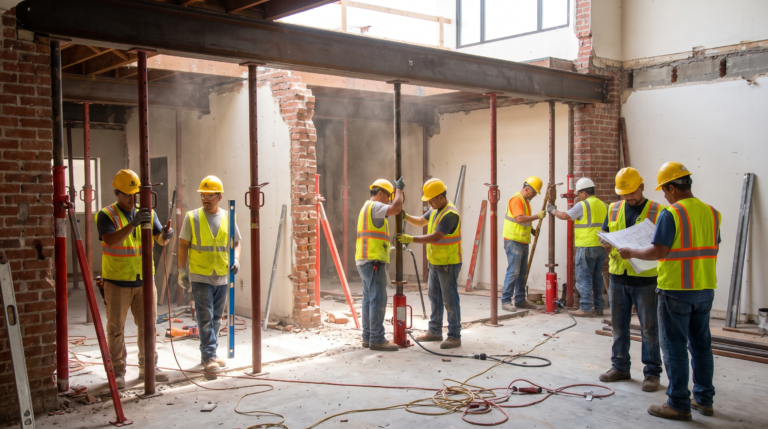
Every screw jack shoring setup uses the same core idea covered in our adjustable shoring post guide — a screw jack is one of the two adjustment mechanisms a post can use. What makes formwork/falsework shoring its own topic is scale and application: a single adjustable post with a screw jack top plate holds one point; a formwork shoring system is a coordinated, multi-point grid built around a concrete pour schedule, with the extension and removal-timing rules above layered on top.
When You Need a Professional
The pour is structural, not a small slab-on-grade patch. Formwork shoring for elevated slabs, beams, or structural pours needs an engineered layout, not field judgment on jack spacing.
You need a removal/reshoring schedule. Knowing when concrete has actually reached strength — and whether reshoring is needed in the meantime — is a calculation, not a guess based on cure time alone.
Multiple jacks are being ganged together. A grid of screw jacks under a deck needs a coordinated load plan across every point, not each jack sized in isolation.
FAQs About Screw Jack Shoring
How far can a screw jack extend from its leg tube?
California’s falsework and vertical shoring standard (Title 8, Section 1717) requires the screw jack to extend into its leg tube at least one-third of its length — extending it further reduces the bearing surface needed to safely carry load.
When can formwork and shores be removed after a pour?
Only once the concrete has gained enough strength to support its own weight and any superimposed loads, per the project’s plans and specifications — not on a fixed calendar schedule. Reshoring follows the same rule.
Is screw jack shoring the same as a single adjustable shoring post?
They use the same adjustment mechanism, but formwork/falsework screw jack shoring is a coordinated, multi-point system built around a concrete pour, while a single adjustable shoring post typically carries one point load. See our adjustable shoring post guide for the single-post case.
Do slabs on grade follow the same shore-removal timing rule?
No — slabs on grade and slip forms are excluded from the standard formwork removal-timing requirement and are handled differently.
Golden Scaffold provides screw jacks, adjustable shoring posts, and full formwork/falsework shoring systems for commercial, residential, and industrial projects throughout Los Angeles and Orange County (CA License #1109519). Call (424) 476-4426 or visit Golden Scaffold for an obligation-free quote — and see our structural shoring services for more on how we support your next project.