Adjustable Shoring Post: How It Works, When to Use One & Rental Options
Not every job needs a full engineered shoring system. Sometimes what a floor, ceiling, or beam needs is a single adjustable shoring post — a telescoping steel column that holds a load at a specific height until permanent support goes in. Here’s what they are, how they’re used, and when you need something more engineered instead.
What Is an Adjustable Shoring Post?
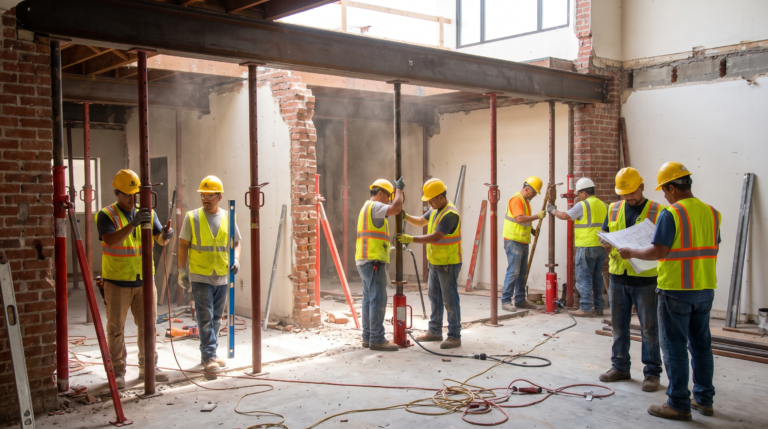
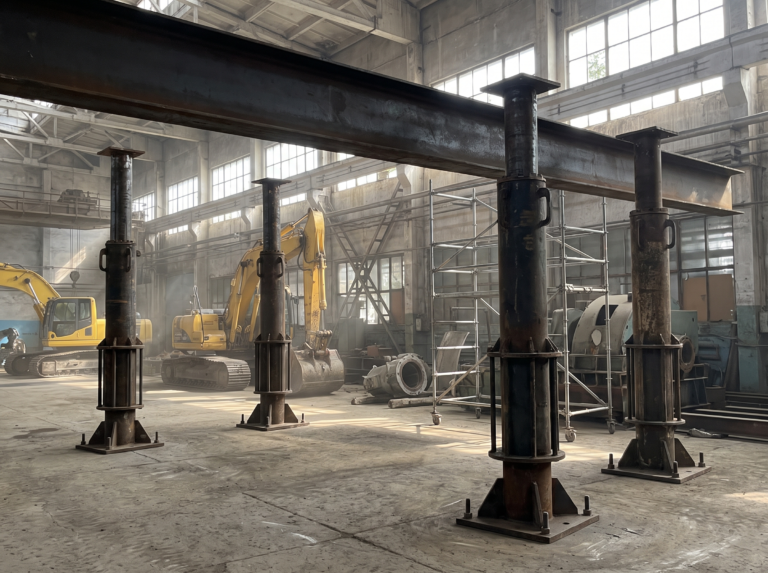
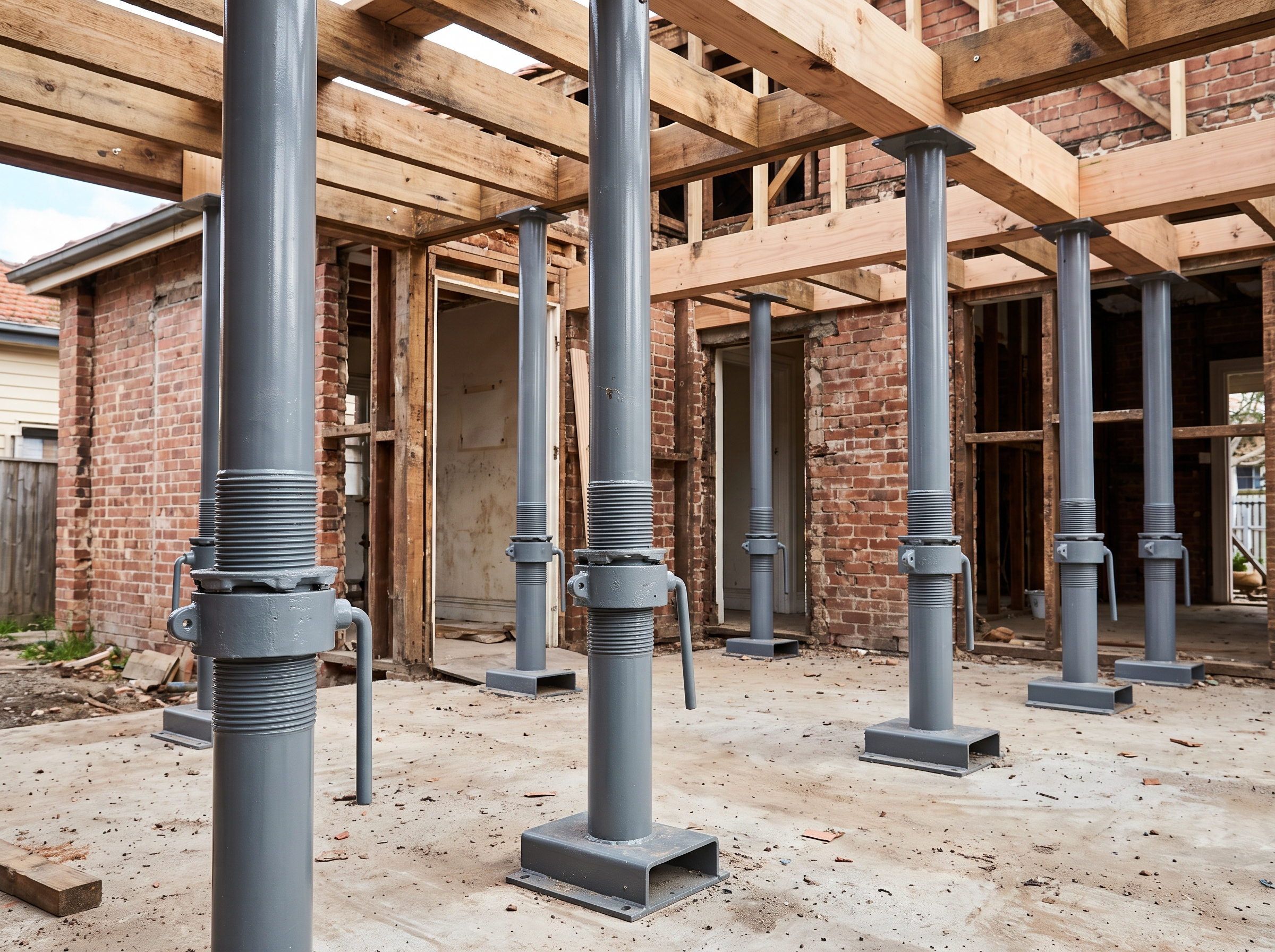
An adjustable shoring post is a telescoping steel column — two tubes, one sliding inside the other — locked to a specific height with a screw jack or a pin-and-collar mechanism. Set a base plate, extend the post to load, lock it off, and it carries the weight above it until the permanent structure is ready to take over. It’s the simplest tool in the shoring toolkit: no engineering drawing required for a single post carrying a modest, well-understood load, though larger or multi-post setups still need one.
How It Works
Screw jack posts use a threaded collar at the top or bottom — turn it to fine-tune the height under load, which makes them the right choice when you need precise leveling or want to adjust tension after the post is already carrying weight.
Pin-and-collar posts adjust in fixed increments — drop a pin through the closest matching hole, faster to set but less precise than a screw jack. Both types are rated for a specific safe working load that drops as the post is extended closer to its maximum height — a post’s capacity at minimum extension is not its capacity at maximum extension, which is where sizing mistakes usually happen.
When to Use One
Floor joist or beam repair. Supporting a joist or beam from below while a damaged section is sistered, replaced, or reinforced.
Basement and crawlspace work. Temporary support for a floor system during foundation, plumbing, or structural work underneath.
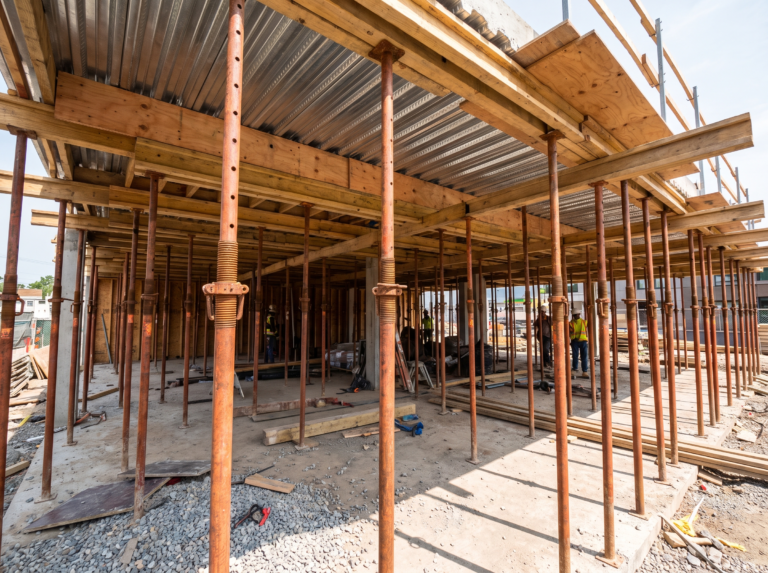
Formwork and slab support. Carrying concrete formwork or a slab load during pour and cure, pulled once the concrete reaches strength.
Point-load support during remodels. Holding a ceiling or floor above a single point — like where a wall is about to come out — before a bigger shoring system goes in.
Single Post vs. an Engineered System
A single adjustable post, correctly rated and set on solid bearing, covers a lot of small-scope jobs on its own. Once a job needs multiple posts working together, a load path that isn’t a straight vertical line, or support for an entire wall section rather than one point, that’s no longer a rental-equipment job — it’s an engineered system. That’s the line between grabbing a post and calling in needle beam shoring or a full temporary shoring wall: load complexity and the number of points being carried, not the size of the room.
Golden Scaffold rents individual adjustable posts alongside full structural shoring rental packages — worth a call either way if you’re not sure which side of that line your job falls on.
Cal/OSHA & Permit Requirements
A single, correctly rated post supporting a modest, well-understood load is standard equipment use and doesn’t trigger a permit on its own. That changes fast once posts are combined into a system, carry a structural (not just a temporary point) load, or the shoring exceeds 36 feet in height — at that point the City of Los Angeles requires a permit and a shoring plan reviewed and stamped by a licensed structural or civil engineer before installation. The Bureau of Engineering’s own shoring (lateral support) application process lays out exactly what triggers that requirement — see LA Bureau of Engineering: Shoring (Lateral Support) Application Processing.
When You Need a Professional
You’re not sure what the load actually is. Guessing at a post’s rated capacity versus the real load above it is exactly how failures happen — get the load calculated before renting equipment to carry it.
More than one post is involved. Multiple posts working together need a load path plan, not just individually-rated hardware.
The job is structural, not incidental. Removing or altering a load-bearing wall, beam, or column is an engineered-shoring job regardless of how simple the opening looks.
FAQs About Adjustable Shoring Posts
How much weight can an adjustable shoring post hold?
It depends on the post’s rating and how far it’s extended — capacity drops as height increases, and manufacturer load tables are specific to each model. Always check the rated capacity at the actual extension you’re using, not just the post’s maximum rating.
Can I rent a single adjustable shoring post, or only full systems?
Golden Scaffold rents individual posts as well as complete structural shoring packages — what you need depends on the scope of the job, not a minimum order.
Do adjustable shoring posts need an engineer’s stamp?
A single post carrying a modest, well-understood load typically doesn’t. Once posts are combined into a system, carry a structural load, or the shoring exceeds 36 feet, a licensed structural or civil engineer’s stamped plan is required in Los Angeles.
What’s the difference between a screw jack post and a pin-and-collar post?
A screw jack adjusts height with a threaded collar, useful for fine leveling or adjusting tension under load. A pin-and-collar post adjusts in fixed increments via a pin through pre-drilled holes — faster to set, less precise.
Golden Scaffold rents adjustable shoring posts and provides licensed, Cal/OSHA-compliant structural shoring for commercial, residential, and industrial projects throughout Los Angeles and Orange County (CA License #1109519). Call (424) 476-4426 or visit Golden Scaffold for an obligation-free quote — and see our structural shoring services for more on how we support your next project.