Shoring vs. Scaffolding: Key Differences and Cal/OSHA Rules
Shoring and scaffolding are both temporary structures built on a construction site, and they often use similar steel frames. The difference is what they carry. Shoring supports the structure itself: slabs, beams, walls and wet concrete. Scaffolding supports people and materials so crews can reach the work.
This guide is for general contractors and project managers in Los Angeles and Orange County who need to know which one a job calls for, which Cal/OSHA rules apply to each, and when a project needs both. Scope note: this covers vertical shoring above grade, not trench or excavation shoring.
Shoring vs. Scaffolding at a Glance
| Shoring | Scaffolding | |
|---|---|---|
| Main job | Carries structural load until the permanent structure can | Gives workers a safe, elevated work platform |
| What it holds | Formwork, wet concrete, beams, floors, walls | Workers, tools and materials |
| Typical systems | Posts, shoring towers, falsework, needle beams, rakers | Frame, tube and clamp, system, suspended and rolling scaffolds |
| Main Cal/OSHA section | Title 8 §1717 (vertical shoring) | Title 8 §1637 and the scaffold orders that follow |
| Engineering | Engineer-signed plan above set height, span or traffic triggers | Engineer for engineered scaffolds; qualified person or engineer above 75 lb per sq ft |
| Comes down when | The engineer’s strength or stability condition is met | The work at height is finished |
What Is Shoring?
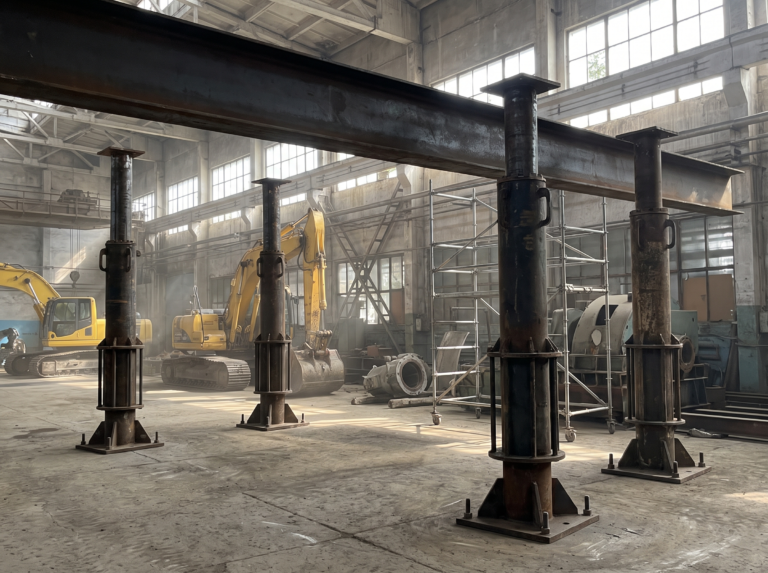
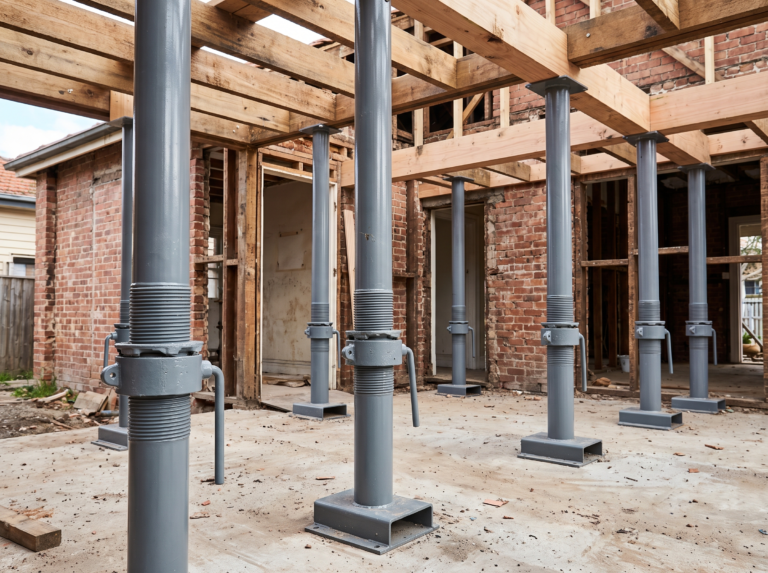
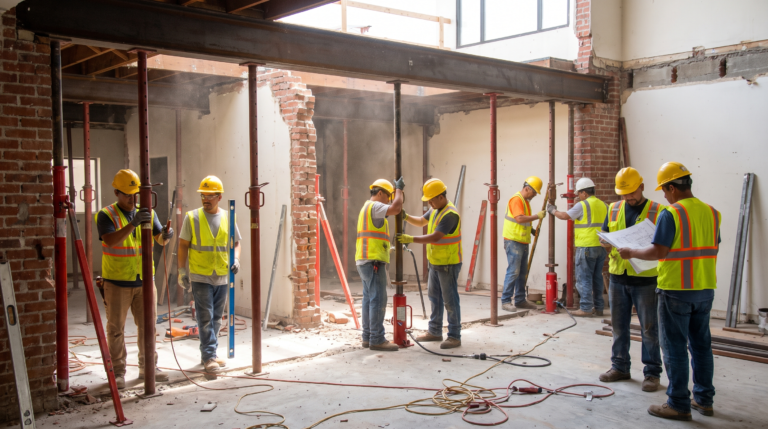
Shoring is a temporary support system that holds up a structure, or part of one, while it is built, repaired or altered. It takes load from above and carries it down to a firm base. In building work that usually means vertical shoring under elevated slabs and beams, or support for an existing floor, roof or wall while members below are removed. Our guide to shoring in construction covers the main types.
Common shoring systems include single adjustable shoring posts, braced shoring towers for heavy or tall loads, and falsework under large elevated pours.
What Is Scaffolding?
Scaffolding is a temporary, elevated work platform. It lets crews reach facades, ceilings, roofs and upper floors safely, and it carries their weight plus the tools and materials they use. It is not meant to hold up the building. See our guide to types of scaffolding for the systems used on LA job sites.
Key Differences Between Shoring and Scaffolding
1. Load and purpose
Shoring is part of the structure’s load path for as long as it stands. If it fails, the slab or wall it supports can come down. Scaffolding carries a working load on its platform. Both are safety-critical, but a shoring failure is a structural failure.
2. Design and load ratings
California rates scaffolds by platform load. Title 8 §1637(b)(2) sets light-duty scaffolds at 25 lb per sq ft, medium-duty at 50 and heavy-duty at 75, and each scaffold must carry its own weight plus 4 times its maximum intended working load. Shoring is designed for the structure it supports: §1717(a)(2) sets a minimum design load of 100 lb per sq ft for combined live and dead load under concrete, and the real number comes from the slab, beams and formwork.
3. When an engineer signs
Vertical shoring needs drawings signed by a California-registered civil engineer when it is over 14 ft from sill to soffit, spans over 16 ft, or has traffic passing through it (§1717(b)(1)). For scaffolds, §1637(b)(2) has engineered scaffolds designed by a California-registered civil engineer experienced in scaffold design, and loads above 75 lb per sq ft set by a qualified person or such an engineer. Our guide to who can design scaffolding covers the scaffold side in more detail.
4. Inspection and removal
Shoring must be inspected before concrete is placed, with written certification kept on site (§1717(c)), and it stays until the concrete or structure can carry itself. Scaffolding is inspected for safe use while crews work on it and comes down when the work at height is done.
Cal/OSHA Rules for Shoring and Scaffolding
| Rule | Applies to | Source |
|---|---|---|
| Engineer-signed drawings over 14 ft sill to soffit, 16 ft spans, or with traffic passing through | Vertical shoring | Title 8 §1717(b)(1) |
| Minimum 100 lb per sq ft combined live and dead design load | Vertical shoring for concrete | Title 8 §1717(a)(2) |
| Inspection and written certification before concrete is placed | Vertical shoring | Title 8 §1717(c) |
| Rated working loads of 25, 50 and 75 lb per sq ft, with a 4 to 1 safety factor | Scaffolds | Title 8 §1637(b)(2) |
| Anchorage and bracing to prevent swaying, tipping or collapse | Scaffolds and falsework | Title 8 §1637(c) |
| Cal/OSHA permit when more than 36 ft high when completed | Scaffolding, vertical shoring and falsework | Title 8 §341 |
Read the full text in Title 8 Section 1717, Title 8 Section 1637 and Title 8 Section 341, and confirm your project’s requirements with your engineer. For the scaffold rules in plain terms, see our scaffolding safety guide.
When a Project Needs Both
Many LA projects use shoring and scaffolding side by side. Typical cases:
- Elevated concrete. Shoring carries the deck forms and wet slab, while scaffolding gives crews access to the slab edge and the facade.
- Structural repair and retrofit. Temporary shoring holds an existing floor or roof while members are replaced, and scaffolding gives access to the work above.
- Facade and wall work. Shoring braces a wall or opening while scaffolding carries the crew working on it.
When both are on site, keep them separate unless an engineer designs them to interact. Do not tie scaffolding to shoring, or load shoring with scaffold reactions, without that design.
Shoring and Scaffolding for LA and Orange County Projects
Golden Scaffold provides scaffolding rental and structural shoring for construction, renovation and structural concrete projects across Los Angeles and Orange County. Our licensed engineers design and stamp Golden Scaffold’s shoring plans, and our team brings 35+ years of combined experience (CA License #1109519).
Get a quote through our shoring engineering page or call (424) 476-4426.
Frequently Asked Questions About Shoring vs. Scaffolding
What is the difference between shoring and scaffolding?
Shoring is temporary support that carries the weight of a structure, formwork or wet concrete. Scaffolding is a temporary work platform that gives workers safe access to a building. Shoring holds the building up; scaffolding holds the people who work on it.
Can scaffolding be used as shoring?
Not unless it is designed for it. Some frame systems look alike, but shoring frames are rated and laid out to carry structural loads, and a work scaffold is rated for workers and materials on its platform. In California, vertical shoring follows Title 8 Section 1717 and its engineering triggers, so treat any shoring use as an engineered design.
Is falsework shoring or scaffolding?
Falsework is shoring. It is the temporary structure that supports formwork and wet concrete, for example under a bridge deck or an elevated slab, until the concrete can carry itself.
Do you need an engineer for shoring in California?
Often. Cal/OSHA Title 8 Section 1717 requires drawings signed by a California-registered civil engineer when vertical shoring is more than 14 feet from sill to soffit, spans more than 16 feet, or lets traffic pass through it. Below those triggers, the layout still needs a qualified signature.
How much load can scaffolding hold?
Under Title 8 Section 1637, light-duty scaffolds are rated for 25 pounds per square foot of work platform, medium-duty for 50 and heavy-duty for 75. Each scaffold must support its own weight plus four times its maximum intended working load.
When do you need a Cal/OSHA permit?
A Cal/OSHA permit is needed for scaffolding, vertical shoring or falsework that will be more than 36 feet high when completed (Title 8 Section 341).